
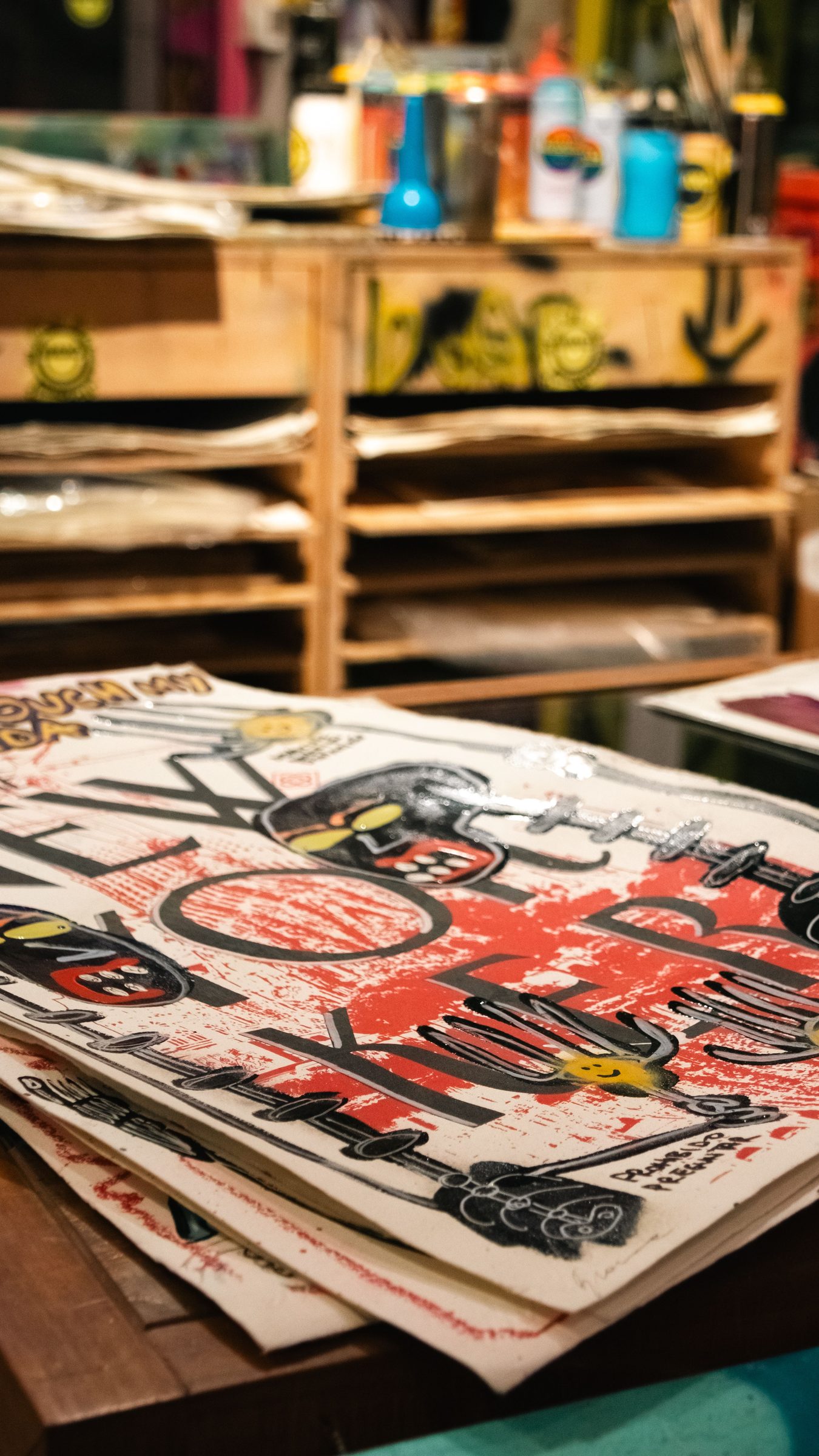
Anyone who collects art comes across terms such as lithograph, screenprint, oil paint and edition. They say something about how a work was made, how rare it is and how you assess its value. A short guide.
Oil paint and acrylic on canvas or panel are unique works: only one of each exists. That makes them rare by definition, and usually the most highly valued.
A lithograph is a stone print. The artist draws on a stone or plate, after which the image is printed in an edition. Each print is an original, not a reproduction, and is usually signed by hand.
A screenprint, also called serigraphy, is created by pressing ink layer by layer through a fine mesh. The technique gives even, powerful areas of colour and is favoured by artists who work with bright colour.
The edition number, for example 53/200, means that this is the 53rd print out of an edition of 200. The smaller the edition, the rarer the sheet. A signature and numbering confirm authenticity.
At Delft Gallery, every work is unique or comes from a small, signed edition. Unsure which technique suits you? We are happy to help you think it through.