
In the art trade, modern art and contemporary art sound like two ways of saying the same thing. They are not. They are markers of time, and once you know the difference you read an auction catalogue and a gallery list rather differently.
There is no official boundary. Even so, most museums and auction houses use roughly the same division. Modern art runs from the last quarter of the nineteenth century to somewhere in the 1960s or 1970s. Contemporary art begins where that period ends and continues to the present day.
Modern art is the art of the break. Artists turned away from the academy and from the duty to reproduce reality neatly. Impressionism, Cubism, Expressionism, abstraction: each movement was an answer to the one before, often with a manifesto attached. There was a direction to it, a belief that art was working towards something. CoBrA belongs in that line, with a life of barely three years, from 1948 to 1951, and an influence that lasted decades.
Contemporary art lacks exactly that single story. There is no dominant movement any more and no manifesto for everyone to position themselves against. An artist decides for himself whether to paint, film, photograph or build an installation, and the idea behind the work often weighs as much as its execution. Nor does the centre of gravity lie with Paris or New York alone: work comes from Lagos, Shanghai and Sao Paulo just as readily.
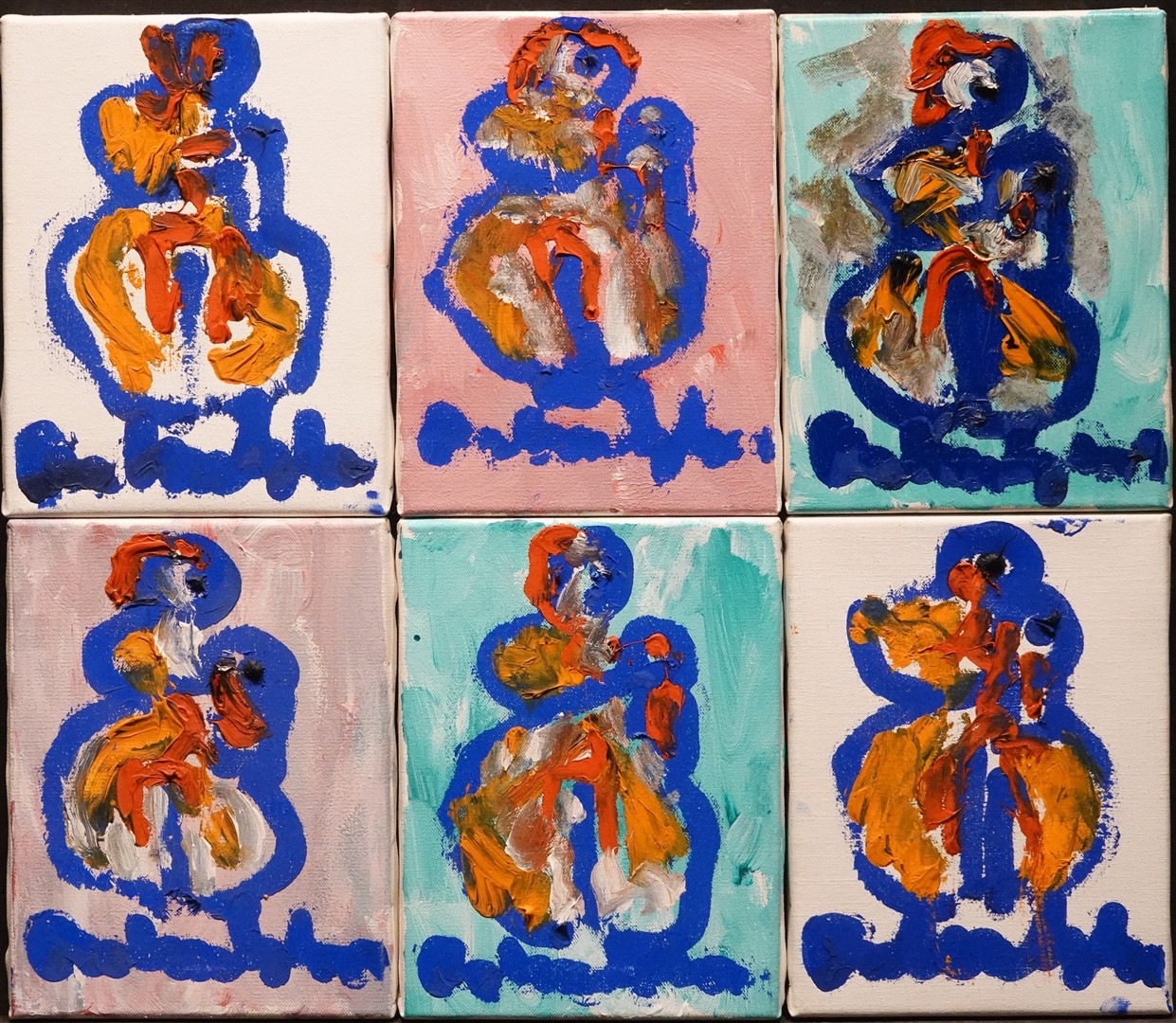
One thing to hold on to: the line is about time, not style. A painting made last week in a visual language reminiscent of CoBrA is contemporary art. The reverse holds too. A severely geometric canvas from 1930 remains modern art, however current it may look on a white wall.
Where does our collection stand? Almost entirely in the contemporary period. Of the works carrying a date, two are from the 1960s, eleven from the 1970s, sixty one from the 1980s and one hundred and twenty three from the 1990s. The CoBrA part is the exception: work by Karel Appel, Corneille, Jacques Doucet and Eugene Brands, artists who were members of the group and therefore belong to the modern period.
That is why you will find two entries at the top of the collection: CoBrA and Contemporary. It is not a ranking and not a judgement of quality. It tells you where a work sits in history, and which market it trades in. Buy CoBrA and you buy a piece of post-war art history with established pricing. Buy contemporary and you buy work whose story is still running.
Both are good reasons to put something on your wall. The only question is which of the two you are looking for.