
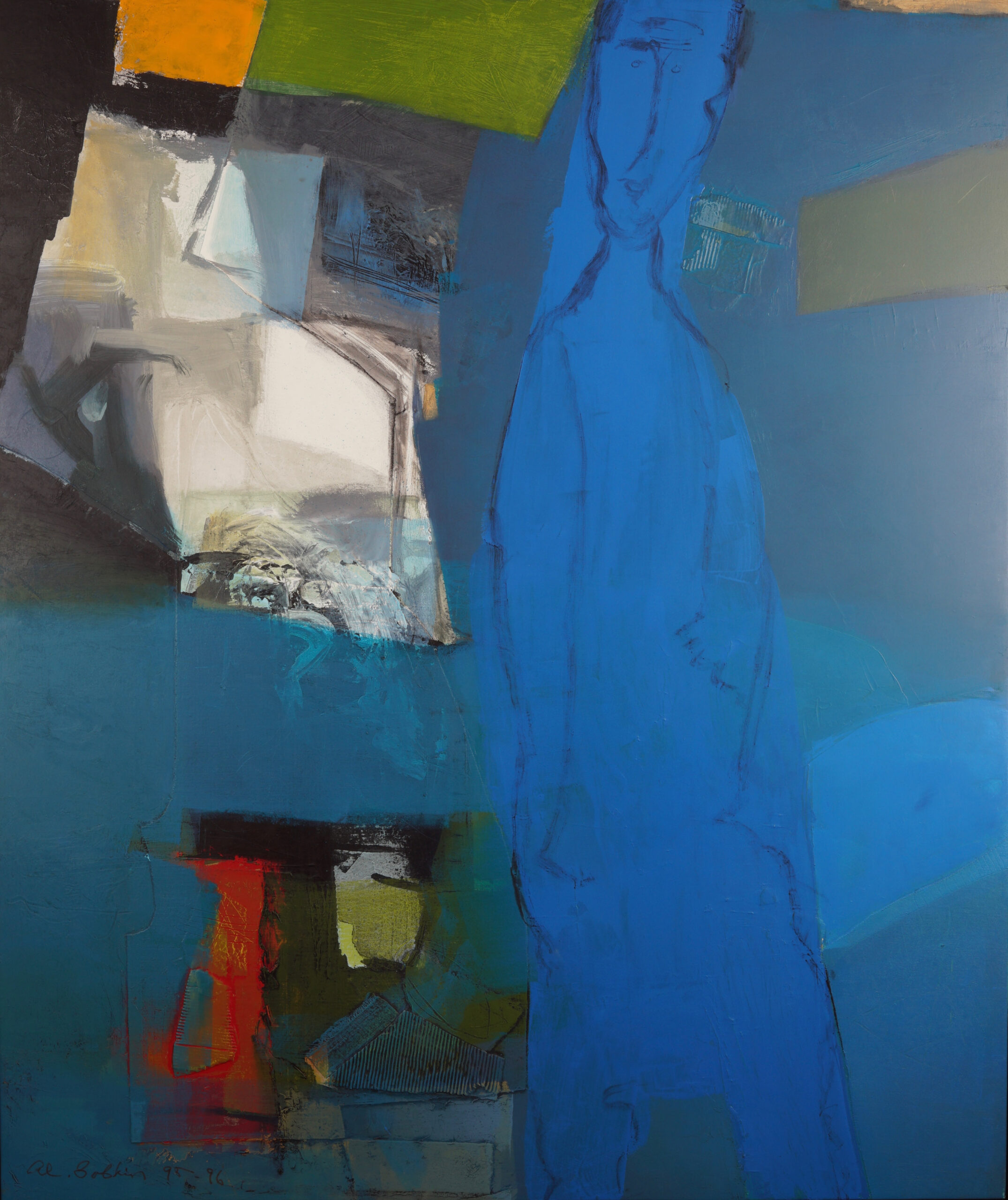
Blue is perhaps the most beloved colour in the history of art, and the Netherlands has a special bond with it. Think of Delft, and you think of Delft blue: the earthenware with its characteristic blue decoration that became world-famous from the seventeenth century onwards.
That blue comes from cobalt. The oxide was applied over the white tin glaze and turned deep and clear after firing. At first the Delft potters used it to imitate expensive Chinese porcelain, but over time they developed a language of their own, full of windmills, flowers and landscapes. In this way it became a symbol of Dutch craftsmanship.
Beyond the earthenware, blue set out on an even longer journey. As a pigment it appears everywhere in art, from the precious ultramarine that medieval painters saved for the robe of the Virgin to the modern artists who filled entire canvases with it. Blue can bring calm, but just as easily depth and tension.
In post-war art too the colour remained indispensable. In the work of the CoBrA painters, bright, unmixed blue sits beside red and yellow, and it is that contrast that brings it to life. Think of the skies of Corneille or the planes of Appel, where a single stroke of cobalt can set a whole canvas in motion.
Our name carries that blue on purpose. Delft Gallery refers to a family name and at the same time to the deep blue that has stood for beautiful, exclusive Dutch quality for centuries. It is the colour you see again in our logo and throughout the gallery.
Look out for it as you walk through the collection. The blue is almost always there. Sometimes it takes the lead, sometimes it is the quiet tone that lets the rest speak.